I Thought I Was Giving Something Back to the Ocean
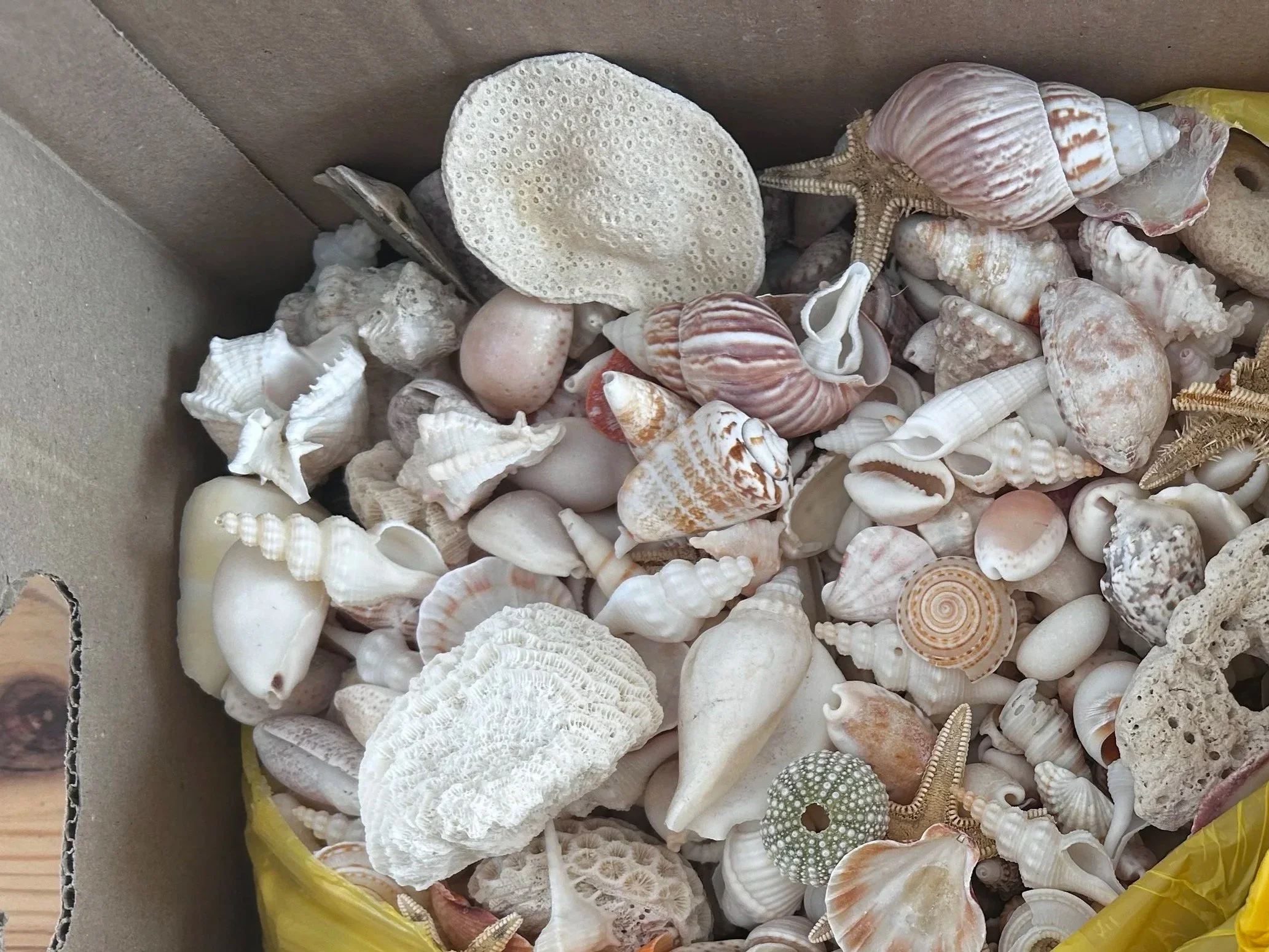
This morning I ‘rescued’ a box of shells from a lady that had collected them over the years from all over the world on various dives and snorkel trips.
I was like a child on Christmas morning. Eager to unbox and discover new shells that I’d never seen before.
To educate myself on these pieces, using the The Encyclopedia of Shells that I just purchased from Vinted.
But I also had the intention to return the majority to the sea.
There was something deeply unsettling about the thought of them potentially ending up in a landfill.
This cardboard box sat in front of me, filled with roughly twelve kilograms of shells, dried starfish, pieces of coral and other marine treasures collected over a lifetime. They had travelled more than most people ever will, gathered from beaches and coastlines around the world by a woman who had spent years exploring them.
She still had endless jars still at home.
There’s something quite unsettling and unethical about taking so many shells from the ocean.
Humans have an urge to possess as much as we can in our lifetime, like it’s a milestone or an achievement, but these things, they’re meant to be admired, not taken from their habitat.
Download the complete Ethical Shelling Field Guide
To someone else, it may have looked like a box of ornaments.
To her, I imagine it was a lifetime of memories.
Every shell had once been picked up with curiosity. Every starfish had once been held in someone’s hands as a reminder of a place, a holiday, a moment in time.
When I heard the collection was no longer wanted, I couldn’t stop thinking about where it might end up. The idea of those pieces of the ocean being thrown into the rubbish didn’t sit right with me. So I bought the collection, believing I could give it a better ending.
Almost immediately, I knew what I wanted to do.
I would return it to the sea.
It felt respectful. A way of closing the circle and giving something back to the ocean after years spent sitting on shelves, or displayed in jars.
Then I looked more closely.
Cowries.
Coral.
Large tropical shells.
Starfish that certainly hadn’t come from the Mediterranean.
This wasn’t a collection from one beach or even one country. It was a collection gathered from oceans across the world.
And suddenly, a question I’d never considered stopped me in my tracks.
Can you return something to the ocean if it didn’t come from this ocean?
At first, I assumed the answer would be yes. That I would be doing the right thing. The good thing.
After all, shells are natural. Coral is natural. Starfish are natural.
But the more I researched, the more I realised conservation is rarely that simple.
Natural doesn’t mean native.
A shell that belongs on a tropical reef doesn’t belong on the seabed of the Mediterranean. Dead coral won’t come back to life. Dried starfish won’t simply become part of the ecosystem they never evolved in. Even something as harmless as returning shells from another part of the world raises questions about introducing foreign materials into habitats that have developed over thousands of years.
The irony wasn’t lost on me.
I had bought the collection because I wanted to do something good for the ocean.
Instead, the ocean was quietly teaching me that good intentions are only the beginning. Real conservation starts with understanding.
So, for now, the box remains exactly where it is.
Not because I’ve given up, but because I think these specimens still have a purpose.
Over the coming weeks, I’ll begin identifying every shell, every starfish and every fragment of coral using The Encyclopedia of Shells . I want to learn where they came from, the role they played in their own ecosystems, and the stories they can still tell. Rather than returning them to the sea, perhaps they can help bring people closer to it through curiosity and education.
Maybe that’s the better ending.
Not every act of giving back looks the way we expect.
Sometimes the most responsible thing we can do isn’t to act immediately, but to ask a better question first.
This collection began as one woman’s way of remembering the oceans she visited.
Just last night on my evening swim I heard a woman tell her little girl to put the shells back as they were leaving the beach, that she could keep only 1-2. This is an important lesson to all of us, shells are not always ours to take. I put together an ethical guide to beach-combing to educate others on this.
I’d love to hear your thoughts. If you inherited a lifetime collection of shells and marine specimens from around the world, what would you do with it?